INDEPENDENCE TO THE END OF THE 20TH CENTURY (1947-2000)
This Part deals with the second half of the 20th century and roughly corresponds to the time scale of the Independence of India (1947) to the end of the century (1999)
INDEPENDENCE AND ITS AFTERMATH
In the years leading up to Independence, La Martiniere’s Anglo-Indian community was both supported by the College and advised by authorities to adapt to changing times. Prize Day speeches by leaders encouraged education, vocational training, and integration into broader society; warning that privilege alone would no longer guarantee security. These messages aimed to prepare the community for uncertain prospects by emphasizing the importance of adaptability, skills development, and public service as opportunities shifted after Independence.
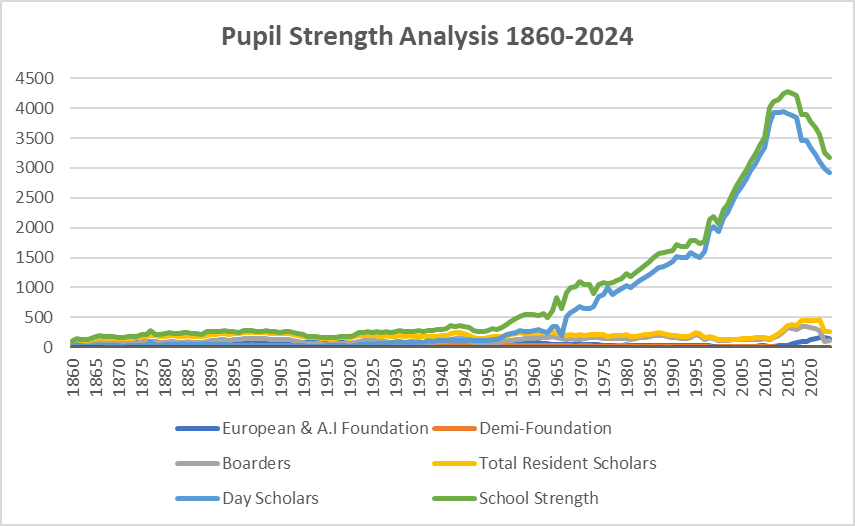
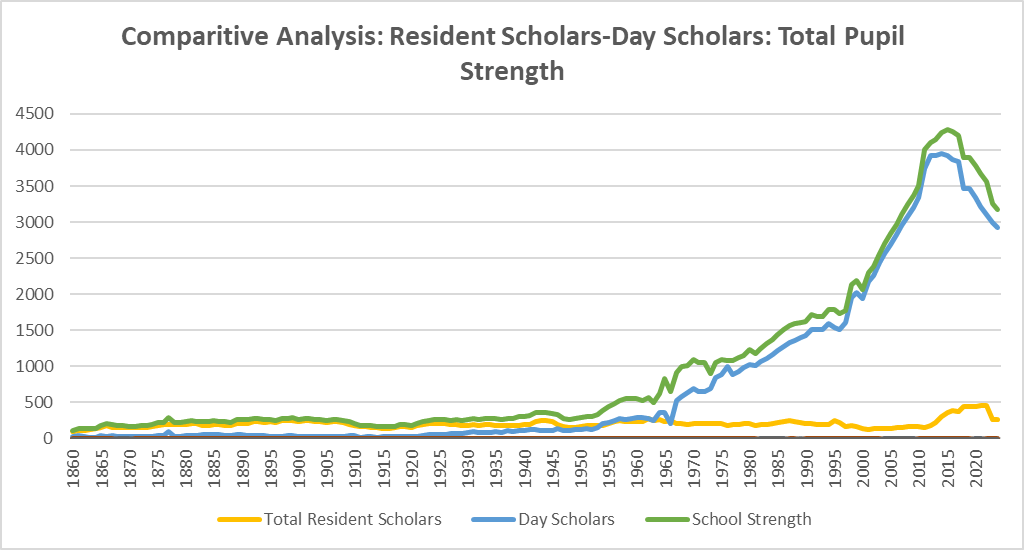
In the first two decades, post-Independence, the Institution mutated from a European School into a leading Anglo-Indian institution, recognized as such by Governtment fiat. The special privileges that were guaranteed to the handful of Anglo-Indian institutions in Lucknow protected the administering of the College. The strong ethos of western values, College traditions, practices and Christian principles, especially charity, was enjoyed by the dwindling number of Anglo-Indian boys now attending the institution, especially as Foundation pupils. With the explosion in the number of admissions, necessary to keep the institution afloat, the Anglo-Indian boy was submerged by the majority of non-Anglo-Indian pupils. Demographics were altered due to the increase in the overall size of the student body.
With the birth of a new nation, India was rapidly ‘reclaimed’ by those who saw themselves as permanent inhabitants, with common racial stock. The horrors of the partition of India on religious grounds skewed the national demographic picture, which would have lasting effects in Independent India and the newly formed country of Pakistan. La Martiniere College, Lucknow could not be impervious to these changes, necessitated by reality, legal compulsions, economic requirements and reweaving of the social tapestry. The response to these changes was pragmatic acceptance, by acknowledgement of the changed circumstances.
At the time of Independence, school education was not widespread. European schools were limited. The Anglo-Indian model of education, combining western thought and international systems of values, was highly prized.
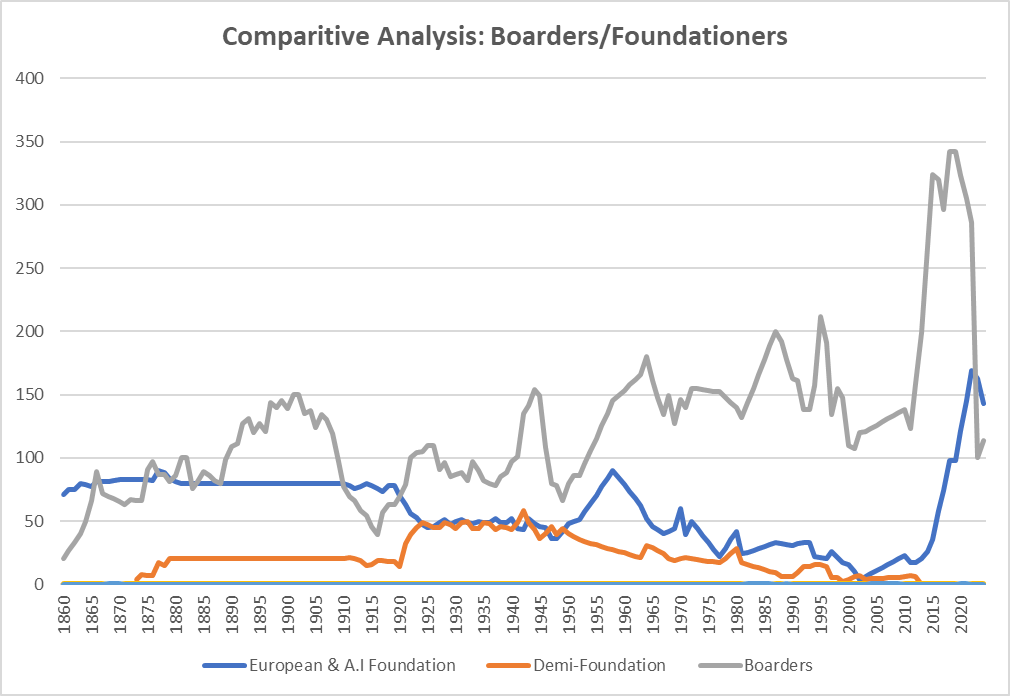
At La Martiniere College, Lucknow, Independence did not mean a mere reshuffling of chairs, but a gradual blending of different systems of values. This was now becoming the most challenging experiment in maintaining tradition while adjusting to the requirements in the great melting-pot of the new Indian democratic system. Economic challenges were at the forefront of the many challenges that the institution had to face. In a democracy that was inherently in economic doldrums, it was a tight rope walk to raise fees for quality education and facilities, while still attracting the largest number of children required for self- sustenance. In the process, the casualties were unfortunately the Foundation scholars, whose numbers remained static and whose subsidized education was seen as charity to counteract poverty, without the veneer of merit.
Demographic changes are generally characterized by changes in ethnicity and socio-economic status distribution. In the context of the College, there was the added element of migration due to Independence and the Anglo-Indian/European diaspora. Significantly, those with very low incomes could not afford the costs associated with migration.
La Martiniere could pride itself on attracting pupils from the entire sub-continent. Boys from vastly different geographical regions could seek admission to La Martiniere College, Lucknow as Foundation pupils, owing to the bequest of the Founder. When the College was made up of less than 200 pupils, 100 of these boys were accommodated by fully subsidised fees. These children, and by extension, their families who benefitted, made up a substantial quantity of the student body. This was gradually diluted due to a variety of factors. Chief among them was the inability of those entrusted with the control of funds of the institution from making wise investments according to the changing opportunities for farming out capital to further the cause of contemporary charity. The disinterest in investment and false justification for conserving funds has led to an eventual cessation of all monetary assistance to the College. This is despite La Martiniere College, Lucknow being the chief beneficiary of Claude Martin’s Will, leaving it financially emasculated.
The period of 1940-1955 was a time of major demographic upheaval for the Anglo-Indian community, primarily defined by the independence of India in 1947, which led to a significant exodus and a sharp decline in their population in the subcontinent. Large numbers of Anglo-Indians emigrated, primarily to the United Kingdom, Australia, Canada, the United States and New Zealand.
Following 1947, the community experienced a rapid and large-scale migration due to several factors. As a community closely associated with the British Raj, many Anglo-Indians felt a sense of insecurity and “betrayal” in a newly independent India. They were a world minority, a bridge between two cultures but not fully accepted by either the British or the Indian society and faced an identity challenge in the post-colonial era.
The community’s social status declined sharply after the British left. The guaranteed positions they held in strategic services such as the railways, customs, and postal and telegraph services, which had provided a secure socio-economic niche during the Raj, were no longer guaranteed.
Primarily urban dwellers, the community was highly represented in specific administrative and skilled jobs during British rule, notably in the railway system and civil services. Anglo-Indians were characterized by English as their mother tongue and their Christian faith (mainly Catholic and Anglican). They maintained their own schools, which made a significant contribution to the education system in India.
It is fortunate that the College has scrupulously maintained administrative records, the primary source of which are the Minutes of the meetings of the Local Committee of Governors and to a large extent the Annual Reports of Principals.
Months before Independence, on 16 October, 1946, the final bastion was breached when the Governors made an exception for the first Indian boarder to be in residence in the College, although as an unprecedented exception:
Resolution 91/46
As an exception the Governors’ Resolution 32/40 dated April 20th, 1940, it was agreed that V. Bharucha, a scholar of Class IX and for seven years’ a day-scholar, might, as a special case not to be regarded as a precedent, be admitted as a boarder on the transfer of his father from Lucknow.
Minutes, 19 October, 1946
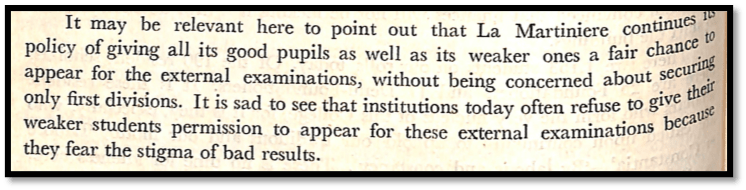
Indian students had been unwilling admitted and then condescendingly acknowledged in the run up to Independence. These admissions were exclusively for day-scholars. Despite the Government requiring the College by repeated letters, to “alter the rules so as to allow of the admission of Indian Boys as boarders,” the Committee steadfastly refused, citing “extremely limited accommodation and the over-riding needs of the European and Anglo-Indian Boys.” The Minutes of the Governors of 11 January, 1947 record the argument: “to keep the percentage allowed, they could not be so admitted except by reducing the number of Indian day-scholars which would be hard on residents of Lucknow.”
Contemporary history, including the diaspora surrounding Independence further changed the composition of the student body. Looking back on the previous year, Principal W. E. Andrews reported on the developments in his Annual Report presented in March, 1947:
Independence was marked by silence. The last meeting of the Committee in British India was held on 9 August, 1947, within the week that Independence was declared. The first meeting of the Committee in Independent India was held on 20 September, 1947. Significantly, the first changes noticed was in the profile of the student body. The change was slow and propelled by the reality of the Indian state as well as by economic reasons. Changes in language, demography and religious observances were introduced by law.
The last headcount before Independence was recorded on 31 March, 1947 as reported in the Principal’s annual Report:
The immediate upshot of these reduced figures was the immediate provision for the admission of Indian boys to make up 15% of the Boarding House strength.
Resolution 60/47 Resolved that in view of the boarding house now having vacancies for their admission the Principal might admit Indian scholars as boarders up to 15% of the total number of boarders.
Minutes, 9 August, 1947
The trend of withdrawals due to migration continued in 1947, and by December of that year, the Principal once again reported:
The British Leaving India, 1947
By the end of 1947, the demographics had changed. Resident Scholars now included Indian boys, and the number of Indian day-scholars was now at 30% of the total strength:
It is significant to ponder on the words of Principal W. E. Andrews, whose message is a contempory record of the changes taking place in La Martiniere College, Lucknow; the most momentous for the Institution after the events of 1857, some 90 years previous. His remarks summarise the attitude towards the new dispensation with which this once very European school now had to contend:
IN RETROSPECT
Between 1900 and 1947, the character and student body of the College was shaped by wider social and political change. As education became more formalised the College adapted to new accreditation and credential expectations; racial segregation policies and social hierarchies continued to limit access and preserve privileges for Europeans and Anglo-Indians; rising nationalist movements and the struggle for Indian independence created political and cultural pressure on institutions; and increasing competition on merit highlighted tensions over the special privileges long enjoyed by Europeans and Anglo-Indians. The period was one of institutional adjustment where educational standardisation, entrenched social hierarchies, nationalist change, and rising meritocratic pressures combined to redefine the College’s demographics and role in a transforming India. Principal Sykes outlined realistic post-school pathways: subordinate administrative, postal, telegraph, forest, railway, medical and public works posts for most pupils; more gifted boys could aim for finance, surveying, engineering, or commissions via military/medical examinations in England. He warned Europeans in India that failing to qualify would let native candidates take those opportunities.
Expansion of other colleges and schools reduced La Martiniere’s monopoly. The rising demand for general intermediate education increased admission pressure while existing racial quotas and fixed percentages constrained intake. Administrative reviews and external reports forced reforms in status, finances and educational aims, aligning La Martiniere with wider British-school educational trends in India, culminating in adjustments influenced by educational reforms such as the Barne’s Report and the Sargent Scheme.
Racial segregation was influenced by maintaining a strong Volunteer Corps and cadet tradition intended to preserve its European identity by training British and Anglo-Indian boys as a reserve force. Military training reinforced the College’s European character and social separation from native communities. The College’s long-standing cadet and military programme shaped alumni career paths into the armed forces, created a durable culture of discipline and drill, and left a direct institutional lineage from 19th-century Volunteer units to the post-independence NCC.
La Martiniere College, Lucknow followed a policy of racial exclusion that gradually softened, moving from explicit refusals of Indian pupils to conditional admissions under pressure from social and political change. In 1920 the Committee allowed boys “of good family” to be admitted but only as day‑scholars. Admissions remained weighted toward professional and land‑owning Indian families. The record shows a trajectory from explicit racial exclusion to reluctant, conditional inclusion shaped by broader political change in India; concessions were often qualified by religion, social standing, fees, and whether candidates served the School’s image. Progress toward inclusion was incremental and conditional: legal quotas, religious segregation in boarding, social status, language expectations, and external events such as politics and war, all shaped who could join and under what terms.
Large post‑war and pre‑Independence withdrawals with boys emigrating to England, Burma, Australia, thereby creating vacancies that forced a policy shift: in August 1947 the Principal was authorised to admit Indian boarders up to 15% of total boarders. Radical change came through demographic and political upheaval rather than voluntary liberalisation. Policy changes from late 1946 through 1947 converted reluctant, conditional admission into formal inclusion within set quotas, while state directives and migration continued to reshape the College’s communal and linguistic profile.
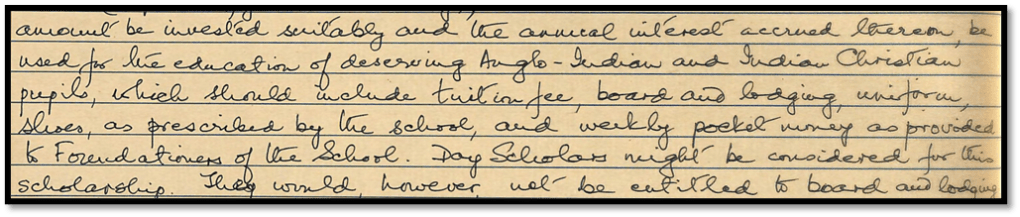
Regrettably, the College failed to reinterpret Claude Martin’s Will to match changing social and economic realities, harming the intended beneficiaries — the Foundation pupils.
Trustees and Governors adhered to the letter of the Will and original Scheme of Administration, while abandoning its spirit: funding, strategic investment, and transparent stewardship for Foundationers were neglected. Foundation pupils came to be viewed as a financial burden rather than the core beneficiaries of the founder’s “lasting charity.” The symbolic quota of 100 Foundation pupils (fixed in 1859) became a rigid lodestone rather than a proportionate share of an expanding student body. The College grew from 200 pupils in the 19th century to several thousands; yet the Foundation’s numbers remained essentially static, creating ambiguity about how many boys should meaningfully benefit. The piecemeal tinkering preserved formal compliance while undermining charitable intent: real financial support, capitation, and domestic measures for Foundation pupils were insufficient. Foundation benefits became tokenistic, obscured by administrative manoeuvres that prioritized institutional form over substantive welfare of deprived pupils. La Martiniere’s governance consistently prioritized legalistic conformity and colonial social norms over adaptive fiduciary stewardship; as a result, Claude Martin’s charitable purpose was diluted, leaving Foundation pupils ill-served through the twentieth century.
In the decades before Independence the Anglo‑Indian community at La Martiniere was foregrounded as a distinct beneficiary of the College, yet also repeatedly counselled by authorities to adapt and integrate into a changing political and economic order. A string of high‑profile Chief Guests and governors used Prize Day addresses to reassure and advise the Anglo‑Indian community—urging education, vocational preparedness, and integration into public and industrial life rather than retreating into privilege. Speakers, including Trustees, Governors, and Principals, combined encouragement with realism: they praised the community’s place in the school, warned of looming social change, and recommended competitive adaptation through training, skill development, and public service. The repeated public reassurances aimed to steady a community facing uncertain prospects, but they also reflected an implicit message that Anglo‑Indian advantage could not be assumed — survival would depend on adaptation, education, and vocational readiness as Independence reshaped opportunities.
CONDITION OF THE ANGLO-INDIAN PUPILS PRE-INDEPENDENCE
The side-lining of the Anglo-Indian student, too young to realise the enormity of unfolding events, was preceded by genuine advice by those in authority. The community was advised to integrate and compete in the changing reality of the new world order. Men of stature referred to this issue repeatedly in public fora. Examples of this can be gleaned from formal addresses made by a series of Chief Guests over the years preceding Independence, in advising the Anglo-Indian community.
The Anglo-Indians
In 1925, The Hon. Samuel Perry O’Donnell CSI, CIE, ICS, Trustee of the Martin Charities and Member of His Excellency’s Council, speaking on Prize Day declared:
A similar sentiment was expressed by Sir Alexander Muddiman, Kt, KCSI, CIE, Governor of the United Provinces of Agra and Oudh on Prize Day, 1928:
A typical Anglo-Indian family gathering
In presenting his Annual Report as Principal, Mr W. E. Andrews in March 1930 expressed the acute awareness of the challenges that the domiciled Europeans and Anglo-Indian community faced:
Occasionally, there was a voice raised by those in authority, reminding the public at large of the objectives of the College and the positive bias towards the Anglo-Indian community. Sir Harry Haig, KCSI, CIE, ICS, the well-known and popular Governor of the United Provinces of Agra and Oudh dwelt on this twice; the first time when he attended as Chief Guest on Prize Day 1935:
Thereafter a similar sentiment was expressed when he attended Prize Day 1938 as Chief Guest:
The Indian Railways: Anglo-Indian Contributions
The theme of encouragement to the Anglo-Indian community remained one of reassurance, as India prepared for Independence. Just a few months before Independence, at Prize Day, in March, 1947, Chief Guest Sir Francis Wylie, Governor of the United Provinces referred to the demographic cross-section of La Martiniere pupils and the way they, especially the Anglo-Indian community, would be absorbed into the demand for qualified personnel in the programme of industrial expansion that was envisaged:
The first half of the twentieth century was turbulent in every part of the world. The first World War had changed the dynamics of politics, the great depression had affected the economic stability of the world, the Independence movement was gaining momentum, the world was at war once again in 1939.
Amid these global changes, the British Empire was becoming an anachronism. This is reflected in the constant pulls and pressures on a micro-level within a single institution called La Martiniere. The calls for greater acknowledgement of the local population were strongly opposed by those who wanted to maintain the status quo in benefits for race, language and religion.
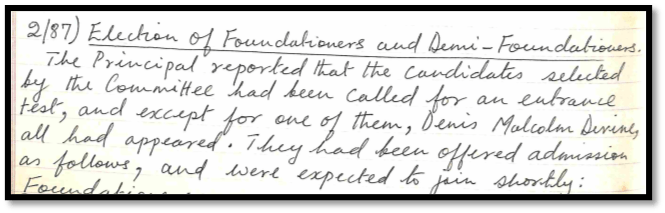
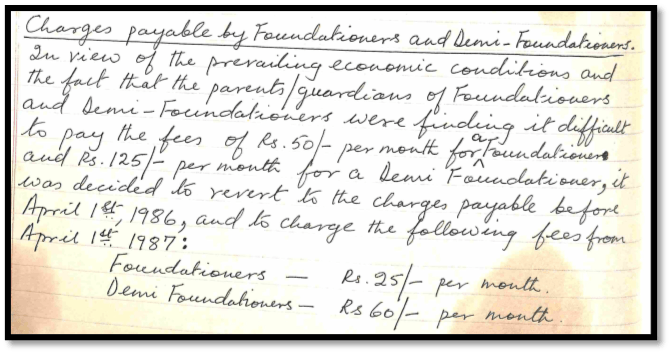
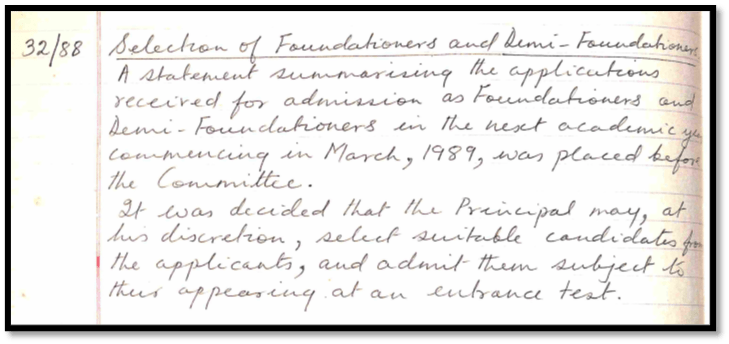
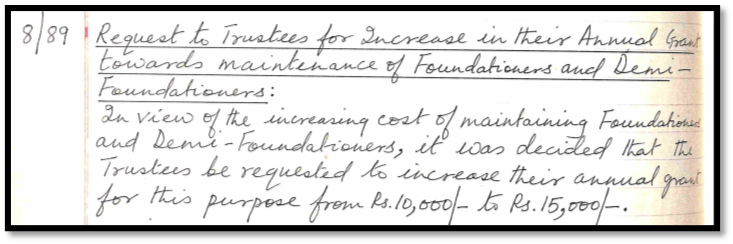
Regrettably, the existing state of affairs failed to re-evaluate the provisions of the Founder’s Will or look for means to ensure that the tenets of Charity, which had motivated his bequest, were aligned to the requirements of the times. The unfortunate damage was done by affecting the primary beneficiaries of his charity, which is, the pupils on the Foundation set up by him. There were no advancements displayed for the benefit of the Foundationers, a line of action that continued until Independence and beyond. Strategic financial investment, sensible capitation to subsidise expenses towards foundationers and other practical domestic arrangements were ignored. The Foundationer was beginning to be seen as a parasite, an excrescence that could not be wished away. Claude Martin’s ‘lasting charity’ and school for the deprived to exist ‘in perpetuity’ had lost its direction. This would become worse as the decades progressed with the source of funding being restricted to the bare minimum requirement according to the letter of the law, a complete lack of transparency by members of the Trust and the mere fulfilment of form, to keep the institution up and running.
The game of numbers continued to be played with fulfilling the requirements of the original Scheme of Administration set up in the context of the Will of Claude Martin. The number of 100 Foundation pupils set in 1859, when the total number of pupils on roll in the College was 200. This figure included both the European and Native Departments. The number 100 has been used through a major part of the history of the College as a lodestone figure. This, regrettably, was only following the letter of the law. The percentage of pupils (in 1859, i.e. 50% of the total) is not considered. The College has continued to increase in pupil strength over nearly two centuries and is now in excess of 3000. There is still ambiguity and a silence on the number of boys to be supported either by the Foundation or by a clever use of residual profits, to fulfil the tone and spirit of the Will of the Founder.
Extract from Principal’s Annual Report 1859Establishment of 145 vacancies for Foundation Scholars (Minutes: 7 November, 1859)
The figure of 100 set in 1859 exclusively for the European Foundation, is a convenient nod to the law. Within this figure of 100, various permutations and combinations have been made:
Before 1859, the number of the European and Eurasian Foundation was set at 70.
On 7 November, 1859 the nomenclature was changed from ‘European and Eurasian’ to ‘European Christian’ Foundation. The Governors resolved that “the number of wards on the European Christian Foundation be raised from 70 to 100;”
On 7 November, 1859, the limits for the Native Foundation were set vide the same Resolution, which continued: and that the number in the Native Foundation be increased to 45; 15 to be Hindu, 15 to be Mussulman, and 15 to be Christian.” In effect, a total of 145 full-Foundation scholars was determined.
In February, 1861, the 15 Native Christians were absorbed into the European Christian Foundation. There were therefore 15 less in the Native Foundation, while the number 100 remained constant as the quota for the European Christian scholars.
A watering down of the original charity began with the admission of ‘Supernumerary Foundationers’ who paid a subsidised fee and were recognised as Foundation pupils in 1876.
In 1876 the Native School was abolished. Therefore, funds for the education of the 30 Hindu and Muslim scholars, acknowledged as Foundation pupils or Scholarship holders were now released.
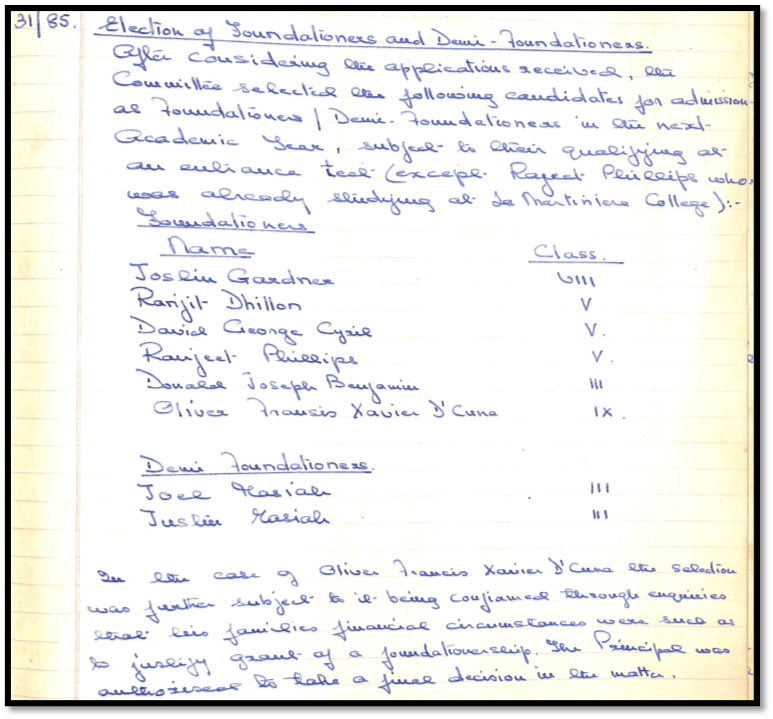
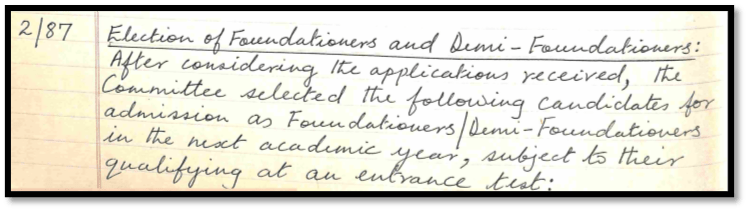
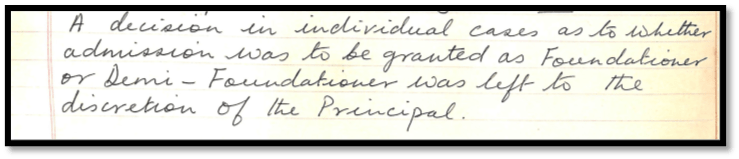
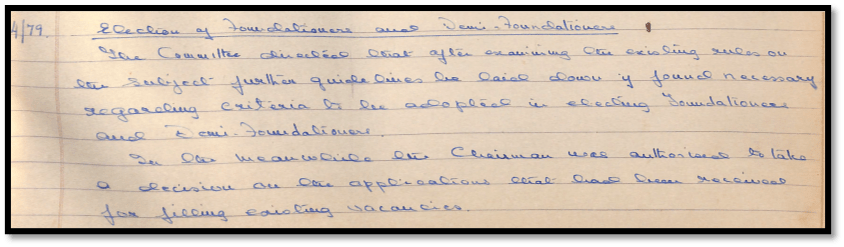
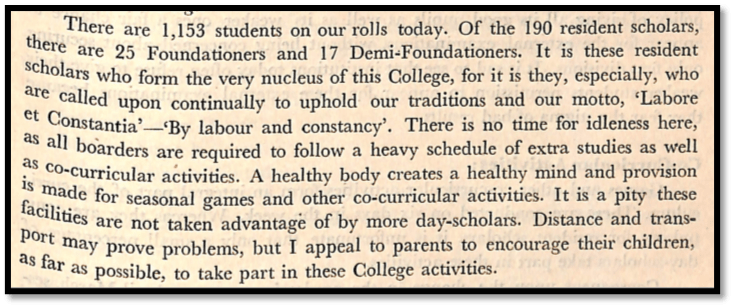
The amalgamation of the supernumerary scholars with the total number of 100 Foundationers was conceived and executed in 1878. Foundationers were demarcated at 80 and demi-Foundationers at 20. The maximum number of Boarders remained unaltered at 100.
In the early 1920s, the breakup of scholars on the Foundation was altered to 50 scholars on the Full-Foundation and 50 scholars admitted as demi-Foundationers.
In 1946, referring to the high prices, the number of full-Foundationers was reduced from 50 to 40. Simultaneously, the number of demi-Foundationers was increased from 50 to 60. It was made clear that the “total number of scholars on the Foundation remaining as before at 100.”
The demographics of the College were temporarily disturbed with the evacuation and resettlement of the Calcutta Martiniere for the period that the East of India was under threat of Japanese aggression in World War II. Effectively, it meant that two institutions were running parallel in the same campus. By 1942, neighbouring Burma had been invaded by Japan. Calcutta was under threat. From 6 April, 1942 the Calcutta Martiniere was accommodated “within the school buildings for the purposes of tuition, games and hospital attention; the Calcutta School retaining its own organisation under its own administrative and teaching staff.” The Calcutta Martiniere continued in residence till 1945, beyond the conclusion of the War. By July, 1945 the Calcutta Martiniere reopened in a city no longer under the threat of war.
Not including the numerical strength of the Calcutta Martiniere, the number of Boarders rose considerably due to the requisitioning of school buildings and the evacuation from Burma. Some of the evacuees were offered demi-Foundationer status, considering their financial condition. These events related to World War II were presented in the Principal’s report on the year 1942.
The first Indian boys were admitted to the College to the ‘Remove’ class: the name given to the class in an English Public School, equivalent to year 11 in modern school education. The nominal Roll for 31 December, 1920 includes the three Indian boys:
The three Indian boys, first admitted to La Martiniere College, Lucknow in 1920 were:
N. Khan (17)
S.M.P. Singh (16)
S. M. Yusuf (14)
Significantly, the Remove class also accommodated M. Doutre. Mr Meredith Doutre would later be the first Indian Principal of the College.
Admitting Indians was publicized as an ‘innovation of importance’ when referred to in the Principal’s report of 1920.
The condescension extended had to be felicitated the following year when, in 1921, Principal R. S. Weir in the Annual Report recorded:
India was changing rapidly and men of stature, Indian by birth, were taking their places in Society, including La Martiniere. The ironies of history were made evident when the first ‘Indian’ Chairman of the Local Committee of Governors who was appointed was Rai Bahadur Pandit Kanhiya Lal, ICS, the Judicial Commissioner of Oudh. He had presided briefly as Chairman in 1919 and thereafter took over as Chairman for an extended period in 1921. Pt. Kanhaiya Lal had been a distinguished member of the Provincial Service and later became a Judge of Allahabad High Court.
‘Rai Bahadur’ was the honorific title given by the British in India, primarily to Hindus. Similar titles were awarded to other religious communities, such as ‘Khan Bahadur’ for Muslims. The earlier refusal for admission of Khan Bahadur Mohammad Hasan Khan by the same Committee under a different Chairman was evoked.
The Principal’s Annual Report for 1923, delivered on Prize Day, 1924 confirmed that there were 100 scholars assisted by the Foundation. The breakup of numbers of Foundationers and demi-Foundationers was not quoted, but from 1924, the number of Full Foundationers was maintained at a maximum of 50, while the number of demi-Foundationers was increased to 50.
The demographics of the College were defined by societal mores and communal considerations. While it was by then an accepted that Indians would be considered for admission as day-scholars, communal living with boys of other faiths was still not accepted. On 8 March, 1924 applications for boys for admission to the Boarding house were rejected unanimously, as the boys were non-Christians.
Rather than admit non-Christian boys to the Boarding House, Mr Charles Currie, Commissioner of Lucknow and a Governor of the College mooted a proposal for building a hostel exclusively for Indian boys. This was when he addressed parents on Prize Day in 1925, for which he was the Chief Guest:
The Government Code for European Schools required that up to 15% of pupils were to be Indian boys. Principal Weir reported in 1925:
The demarcation to restrict the percentage of Indian pupils was sanctioned by official approval, despite Indian officers increasingly being in control. On 24 February, 1926 with Justice Wazir Hasan as Chairman, the following resolution was adopted:
“VII Read a letter from the Inspector of Schools to the Governors asking their views on the advisability of altering the 15% rule regarding admission of Indian boys. The Governors decided that they were in favour of no change in the figure for the present but that they would communicate with the Inspector should fresh exigencies arise.”
By 1928, Principal W. E. Andrews reported to the Govenors on the changing demographics in the College as required by law. On 29 July, 1928 it was therefore resolved:
Indian Day Scholars
The Principal stated that the Regulations now permitted of 25% of the total enrolment being Indian Day Scholars, and that the present percentage was 17.4. It was agreed that the Indian applicants be admitted up to 25%
The demographics of the College increasingly began to reflect the number of Indians admitted. Figures were scrupulously maintained. In the Annual Report of 1928, the Principal reported that of the 63 day-scholars in attendance, 37 were Indians.
A gradual change in attitude towards Indian students was also surfacing, compelled, no doubt by the reality of circumstances. Chief Guest Sir Alexander Muddiman, Kt, KCSI, CIE and Governor of the United Provinces of Agra and Oudh at Prize Day, 10 March, 1928, attempted to smelt racial acceptance:
By 1928, the Committee recorded that as per the regulations in force, 25% of Indian boys could be admitted as day-scholars. The Indian community had been under-represented at 17.4 %. On 29 July, 1928, this anomaly was sought to be rectified.
The admission of Indians boys, generally of professional and land-owning classes, was not without its difficulties for the European School. Chief among them was that standards in English were deteriorating. In his Annual Report on Prize Day, 1930, Principal Andrews recorded:
The changes that were taking place were rapid. On 23 August, 1930 the Governors asserted that the College was being run on the pattern of a British Public School and that there was a preference for masters with a British University training, despite the accusations of racial discrimination.
8. Resolution of Anglo-Indian and Domiciled European Association of All-India & Burma
A circular letter from the Education Department, U. P. Govt, to all Governing Bodies of European Schools, was read, asking for opinions on a resolution of the Anglo-Indian and Domiciled European Association, All India and Burma.
The resolution briefly was that
(a) the matriculation examination should be taken by students in European Schools,
(b) racial discrimination in making appointments to the higher posts on European Schools should cease, such appointments to be made irrespective of nationality and of the country in which the degree is obtained,
(c) Indians should not be members of the Governing Body of a European School.
The Committee were of the opinion that
(a) the Matriculation Examination might be introduced as an option, but that the existing curriculum of studies and of public examinations should not be altered,
(b) this paragraph was badly worded and did not express the Associations real intentions: that this College, being run on the lines of a British Public School, would prefer men with British University training;
(c) legislation on this point was not necessary.”
In 1931, Principal Andrews’ Annual Report presented the growing popularity of the Intermediate College system, which had a direct bearing on the demographics of the Institution. Both the domiciled European community as well as the Indians admitted to the College were aware of the need for higher education. Principal Andrews recoded “that “the thoughtful Indian parent wants discipline and impartiality in the education of his sons … It is obvious from this that the domiciled community are now fully alive to the importance and necessity of higher education.”
The admission of boys despite their faith began to change in the third decade of the century. An exceptional case, details of which are withheld, is when the application of a Parsi-English boy was received for admission to the Foundation. This had never happened before. A highly respected Governor of the College St George H. S. Jackson, MLC and Bar at Law agreed to interview the father of the applicant Fredrick Vaid to report on the merits of the case. The details of the interaction are not available, but on 17 April, 1931 Fredrick J. Vaid was among the boys officially elected to the Foundation.
A studious rejection of all applications for admissions of ‘Indian’ pupils was made till the beginning of the 20th century. With greater incomes, accesses to international trends, global travel and awareness of the advantages of formal education, more Indians kept clamouring for admission to this very European school.
As early as 1904, not very subtle refusals were made unapologetically. It was clear by the superscription: “Natives not admitted.”
The great divide in demographics was supported by Government policy. At the Domiciled Education Conference of 1912, the Definition of the Community and the privileges sought by them was spelled out.
“The definition of the members of the domiciled community had been raised in the opinions submitted. The definition as given in paragraph 2 of the Codes was reasonable and should be allowed to stand. The Code made provision for the admission of a certain percentage of Indians. There was no intention to alter such provision. It was necessary, however, to see that this percentage is not exceeded and that such schools are not invaded by children of purely Indian descent, who pass themselves as Anglo-Indians.”
The term of the day to define a non-European was ‘native’, a label that post-Independence has pejorative connotations. With greater demands for independence, the mindset of the European was compelled to change. On 10 May, 1917, the appointment of a non-European Science demonstrator reflected this change. Referring to his appointment he was described in the Minutes of the meeting that day as ‘a native’, a phrase that was struck out and replaced by the term ‘an Indian’. This correction was also initialled by the Chairman of the day, B. Lindsay:
The early 1920’s was a confusing time for the Governors of the College. Applications for admission of Indian children were first summarily dismissed by the Governors. The Chairman of the Committee was Mr B. Lindsay, ICS, appointed in January, 1920. Lindsay had advised the Government regarding the major anti-British campaign in India called the Khilafat Movement led by the brothers Muhammad Ali and Shaukat Ali. Applications for admission for boys of Indian parents or of mixed parentage were unlikely to be considered.
Surprisingly, on 14 February 1918, a concession was made for the admission of an unnamed boy who was of ‘mixed parentage’. In his favour, the boy had been recommended by a Rev. W.W. Merton, and it is presumed that the boy was a Christian. The boy was permitted admission on the payment of full fees.
In March, 1920, Mrs E. Khan, an Englishwoman applied for admission for her son who followed his father’s Islamic faith. Such a union, seen as miscegenation, was frowned upon. The application was outright refused.
A month later, Khan Bahadur Mohammad Hasan Khan applied for admission for his son. The father of the boy had been awarded the honorific title of ‘Khan Bahadur’, a title granted to individuals for distinguished service to the British Empire or for public welfare. This sign of high honour, albeit below a knighthood, was accompanied by a Title Badge. Nonetheless, on 8 April, 1920, the application was refused. It was the last time that an outright refusal was made on grounds of race.
Significantly, four months later, the same Committee was obliged to acknowledge the changes in the times when on 12 August, 1920, the same Committee that had rejected applications of Indians, now resolved differently, with a face-saving condition that Indian boys must come from ‘good families’ and that they would only be admitted as day-scholars:
Resolution XIV The Secretary reported that he had some applications from Indians for admission. These were boys likely to go to England and wishing to study for their Senior Cambridge Certificate. It was resolved that boys of good family might be admitted subject to approval of the Committee and only as day scholars. The fees to be Rs 20/- per month.
Considering the changes that were sweeping over India, the Committee on 4 November, 1920 agreed to admit Samuel Pant, the grandson of an Englishwoman, though his father was an Indian. He was admitted as a Boarder on full fees. A saving grace was that the boy was a Christian, a fact recorded in the Minutes.
The change in overall attitude in the College was reflected in the decision to readmit Mrs Pant’s son, who had been expelled for some misdemeanour in 1922. The circumstances must have been exceptional as on 24 February, 1926, four years after the incident, the Committee was approached for readmission of Samuel Pant. This was liberally granted.
Alongside academics and accreditation, the European nature of the demographics of La Martiniere was maintained by a strong and much-admired Volunteer Corps, a Civil Defence movement with the underlying purpose of being able to call up reserves of young men in case of an emergency, such as had evinced itself in 1857. This was exclusively for British and Anglo-Indian boys. While the physical training and skills taught were useful, the underlying principle was to further the gap between the ‘us’ and ‘them’ of the European and the Native.
Following the harrowing events of 1857, the first formalisation of a military tradition had been the affiliation with the Oudh Volunteer Riles (1859) and the Cadet Corps (1860) consisting of school-age boys. The bearing of arms and military drill inspired generations to join the armed forces both for the Empire and later, in Independent India. The excellence in activities related to the National Cadet Corps (NCC) thereafter is a direct offspring of this exercise.
In 1909, the activities of the Volunteer Corps were singled out for special commendation by the Principal in his Annual Report:
“Now what is being strongly advocated in England, not only by the Heads of some public Schools but by the War Office, is that with a view to ensure an effective increase in the defensive forces of the country, drill and Military training should be made a part of the education of all School boys of suitable age and size. Here in the Martiniere, as far as this particular School is concerned, we have, I think, anticipated this movement and gone a considerable distance in this direction, having done our part in the great programme for “the universal training of English School boys in drill, manoeuvre, and the use of arms.”
“Every boy who comes to the Martiniere is required on attaining a certain age and size to go through the Musketry Course and to drill regularly with his Company, making use of the Rifle or Carbine which the Government supplies. He begins his practice with the Morris Tube in the shooting gallery attached to the Gymnasium and then proceeds to the Rifle Range on the Martiniere grounds.
“In this way the school has done its share to provide a reserve of trained men who can be relied upon in an emergency.
“This has been going on for the last thirty years during which time the Martiniere Volunteers on leaving school, some 1500 of them, have carried their knowledge of weapons and drill to every part of India…
“Yes, there is every reason to believe that, if the occasion should arise, they would behave just as well as their gallant predecessors and fathers who, in the Siege of Lucknow in 1857 held ‘the Martiniere Post’ in the Residency.”
At the commencement of the First World War, the Volunteer Corps was disbanded and replaced by the unpopular Indian Defence Force (IDF). This was a part-time defence force established in 1917 to release regular troops from garrison duties. Units in the British section were all British and many of the Europeans were conscripted. Under the IDF, military service was compulsory for all Europeans residing in British India between the ages of 16 and 50. Boys of La Martiniere between 16 and 18 were only obliged to undertake training and not service. The IDF was generally unpopular due to conscription.
The Chief Guest at Prize Day, held on 24 March, 1918, Major-General E. S. May, C.B, C.M.G. referred to the unpopular move to disband the Lucknow Volunteer Rifles.
On that day, the Principal Mr Garnett in his report for 1917, referred to the emotional link that had been broken when the Martiniere boys had had to surrender their badges, proudly worn in recognition of the contribution during the Mutiny. He complained that the vibrant infantry tradition in the College had been replaced by the artillery:
Nevertheless, the Martiniere boys received good reports from the Garrison Commander of the IDF:
The unpopular Indian Defence Force was disbanded and replaced by The Auxiliary Force (India) (AFI). This was a part-time, volunteer military organization formed in 1920. It was open only to Europeans and Anglo-Indians and was modelled after the British Territorial Army. The AFI was disbanded after India’s partition, and its role was succeeded by organizations like the modern Indian Territorial Army and the National Cadet Corps (NCC).
Appreciation for the contribution of the Martiniere boys was received from the Commanding Officer of the Lucknow Auxiliary Force in 1922.
The annual Military Training Report, a component of the Principal’s Report for 1947 records: “The Lucknow Contingent of the Auxiliary Forces (India) was disbanded finally on 14th August, 1947.”
The National Cadet Corps (NCC) was formed as the youth wing of the Indian Armed Forces. The NCC was officially raised on July 15, 1948 following the promulgation of an Act of Parliament based on a bill approved by the Constituent Assembly.
Prime Minister Nehru at the first NCC DayIndian Postal Stamp Commemorating the 25th Anniversary Of The NCC, 1973
The establishment of the National Cadet Corps in the College was a continuum of successive systems of national service and para-military training. Unlike its previous avatars, the NCC was exclusively for Indian citizens:
This section deals with the second fifty years of the life of the College (1895-1945) and roughly corresponds to the time scale of the turn of the century (1900) to the Independence of India (1947).
At the turn of the century, the demographics of the College was influenced by four major factors:
The academic accreditation available for pupils in the education sector as the sector became more formalised.
The rigid policy of segregation of races, despite the movements for change.
The angst surrounding the privileges for the European and, now increasingly, the Anglo-Indian community in India, in the face of general competition and merit.
The Independence of India and its effect on demographics of the College.
INFLUENCE OF ACADEMIC ACCREDITATION ON DEMOGRAPHICS
In the Principal’s Report of 1897, the Principal spelled out the culmination of the school leaving system and the evaluation available at that that time. “The more important public examinations for which we compete are five in number: namely those for the Roorkee College Engineering Department; the Upper Subordinate Civil English Department; the Government High or Final Standard for European Schools; the Middle Standard; and the Primary School.”
He went on to describe the challenges and opportunities associated with the school-leaving examinations:
“The highest of these is the Roorkee Engineer Entrance Examination … It seems a matter of some moment that so few of the successful candidates for this, one of the best avenues for employment in India, should be from the European community. … We would suggest that it would be of advantage to extend the area of competition by removing one or two of the present restrictive regulations. Especially the one placed first in the Government rules stating that ‘candidates for admission to the Engineering Class must be statutory Natives of India’. … At the present time owing to financial pressure there are many European parents in this country who are unable to send their children to England; parents who have spent the best part of their lives in India, but who are not, and cannot declare themselves to be, statutory Natives of India.”
Thomason College, Roorkee
At the end of the 19th century the objectives of the School were spelled out in the Prospectus of 1899:
At the Annual Prize Distribution on 10 April, 1900, Principal Gaskell-Sykes dispensed with the reading of a formal report, to use the opportunity to address parents on the curriculum required at La Martiniere College. Speaking on the significance of a general education rather than a purely technical one, he said:
“One of these questions (of the day) has reference to the place which Technical or Industrial education should occupy in schools like the Martiniere. Our own opinion is that beyond an ordinary carpenter’s workshop and a draughtman’s room, little should be attempted in this direction in a school, the main object of which is literary education associated as a matter of course with physical training in various ways. … Students should come to a course of Technical Education thoroughly prepared by a sound Elementary Education and with a mental training and discipline which can be obtained only from a secondary education of a general and not a special character…”
Principal Gaskell-Sykes was clear that only the most gifted would be eligible for the top posts. The Martiniere, it was evident, prepared those who persevere for respectable subordinate posts:
“Another of the questions of the day in this country has reference to openings for a start in life for young men on leaving school… For those who persevere and prepare themselves at school there are many openings inviting competition. For those in the school for instance who are not likely to reach the highest classes there are subordinate posts in the Telegraph Departments, the Post Office, the Forests, Railways, the Salt and Opium Departments the Subordinate Medical Service, the Subordinate Department of Public Works, besides posts of various kinds in printing establishments and in manufacturing and mercantile pursuits. For the more gifted boys there are Accounts and Finance Departments, the Survey of India, and the Engineering Branch of the Public Works Department. Though some of the Martiniere boys have at various times passed into the Army through Sandhurst or Woolwich, and others into the Indian and Army Medical Services through examinations in England, we are not at present referring to these but confining our attention to openings that present themselves directly and immediately in this country.
“… If the Europeans and domiciled in this country do not exert themselves and establish their superior claims by shewing themselves the best qualified in these competitions they will have no one to blame but themselves if these good things go, as indeed they are already going to a very great extent, to the natives of this country.”
At the turn of the century, the demographics of the College displayed representation from all parts of British India, a fact proudly presented by the Principal in his Annual Report, 1901:
The protective nurturing of the Girls’ establishment came to an end in 1908 when the Girls; establishment was designated as La Martiniere Girls’ School, later to be La Martiniere Girls’ College. The overall numbers were immediately reduced, and the College reverted to being an all-boys’ institution. The demographics had changed, yet again. The formal conclusion to this phase in the demographic history of the College concluded when all formal documents were handed over to the Girls’ School, drawing a double line to end this chapter. Principal Gaskel-Sykes Governors recorded the final resolution on 1 September 1908 ordering that a copy of the recorded proceedings related to the Girls’ establishment for the previous five years be handed over to the Secretary of the Girls’ School.
On the academic front, the School-leaving examinations continued to be qualifying examinations for entrance to Thomason College, Roorkee, the Government High and Middle School Examinations and by 1913, the Allahabad University Intermediate Examinations, which would, in 1921 become the autonomous Intermediate Board.
By 1914, Principal Garnett proudly announced affiliation of the College for the Cambridge University examinations:
In May 1916, Lt Col Sir Louis Stuart, CIE prepared a Note on the General Administration and Financial Position of La Martiniere College, Lucknow. He was later the Judicial Commissioner of Lucknow and Chairman of the Local Committee of Governors. Lt Col Sir Stuart presented a detailed analysis of the contemporary demographics of the College and suggested what was required for the rehauling of the College in academics and finance:
“From the time of the Mutiny (I need not go back further) to 1871 when Mr Sykes took charge the task of the Governors was comparatively easy. During that period, the Anglo-Indian of the class that came to the Martiniere had the best opportunities of obtaining remunerative employment that he has probably ever had in British India. The Mutiny had reduced the number of available candidates, and the events after the Mutiny had increased the number of posts. Further, there were very few other schools in this part of India. The present class of Hill schools had hardly come into existence, and the Martiniere was a good a place for education as could be found in the country.
“From 1871 to 1909 when Mr Sykes retired, conditions got more difficult, but the position of the Martiniere still remained good… Mr Sykes laid himself out to convert the Martiniere into the cramming establishment for Rurki. … What was the consequence? Parents sent their sons to the Martiniere in preference even to good Hill schools and the number of Boarders was as great as could be accommodated…
“When Sir Harcourt Butler came to Lucknow as Deputy Commissioner and as such became ex-officio Governor of the Martiniere he was not satisfied either with Mr Sykes or with the Martiniere methods. He found the School slipshod and slovenly. … Then came Mr T. P. Wood who was Principal till 1915. Mr T. P. Wood got in several new members on the staff and tried hard to turn the school into something like an English Public School. But the result has so far not been very gratifying. As an Establishment for providing a career for Anglo-Indian boys the School is not what it used to be. (Mr Sykes) had this great advantage that he understood the pupils and the parents of the pupils, and the pupils and the parents understood him. His methods may not appeal to the father of an English Public-School boy but they appealed to the father of the Martiniere boy. We must remember that the parents of the Martiniere boy think very little of refinement, cultivation of the humanities, formation of character and so on. They want a career for their sons as cheap as possible. In Mr Sykes’ time they got it.”
In keeping with the times, the Inspector of Schools recommended that the College be upgraded to an Intermediate College for Anglo-Indians. A decision in this regard was taken on 23 April 1922:
“IV The Inspector of European Schools report on his annual inspection was laid on the table. In the last paragraph he recommends that the Trustees or those responsible should inaugurate reforms in the Institution bringing it more into line with an Intermediate College for Anglo-Indians.
This point was discussed, and it was resolved that the Trustees of the College be invited to meet the Governors of the College in the cold weather of 1922 to discuss the question of finance and the status of the College and its alumni.”
In the Principal’s Report presented in 1923, Principal R. S. Weir announced that the College had been recognised by the Intermediate Board and that the first batch would be sent up in 1924 year.
There were wider options open at the close of the first quarter of the century, for a more general education to be available. Naturally, this also brought on a greater pressure for admission into the College which was circumscribed by restrictive numbers and percentages for racial representation. In 1924, the Principal for perhaps the first time in the history of the College admitted to the redundancy of the Roorkee engineering entrance examinations for which the College had been converted into a veritable ‘cramming class’:
“The Roorkee College examination which some years ago bulked so largely in the College life has almost ceased to affect us. Owing to the rise of colleges all through the Province it is now waste of time to attempt to enter Roorkee until one has passed at least the intermediate examination. For this reason, the Governors of the College obtained recognition from the Intermediate Board and last year we sent up our first crop of three boys from class XII of whom one obtained a scholarship. We are presenting for the intermediate this year no fewer than 9 boys and have lively hopes of their success.”
La Martiniere was progressively being compelled to align with the educational systems and changes advised for British Schools in India. This included following the recommendations of the Committee on Anglo-Indian Education, more popularly known as the Barne’s Report (1946). In conjunction with the Sargent Scheme (1944) for literacy in post-Independent India, the College would have to align itself with the trends recommended, rather than an earlier rejection of the Hartog Commission report (1929) that had been critical of the elitist systems of European Schools in India.
Even as the College was grappling with the decline and closure of the Native School, the demographics of the institution underwent change with the setting up of the Girls’ Establishment. A ‘Dame’ school, run by Mr & Mrs Abbot in Lucknow, went bankrupt. An appeal was made to the Local Committee of Governors to take over the teetering establishment, which would otherwise result in European and Anglo-Indian girls being abandoned.
In an unprecedented move, on 10 July 1867, the Visitor of La Martiniere College, along with every Member of the Local Committee of Governors sent a suo moto petition to the Trustees for the establishment of Girls’ School for European and Eurasian girls, rather than for the ‘native’ female population as was proposed by the High Court from the funds that were available from General Martin’s Will following the East India Company ceding to the British Government. In a strongly worded recommendation, they took upon themselves the onus of pioneering a school for girls in Oudh:
Anglo-Indian boys and girls
“We find though that this is not want of funds or of energy, on the part of the promoters that has rendered. the results of the efforts already made so little satisfactory; but it is the apathy of the native community whose benefit it is sought to secure. It is the bigotry of parents, their fear of this new matter and the dead weight of the prejudices of the past ages against which the promoters of female education in this part of India have to contend.
We fear that the establishment of a School under the immediate management of the highest officials of this Province would, increase these prejudices and add to the difficulties of those at our quickly, but as we hope surely, making progress towards the general diffusion of this inestimable advantage. We fear that for some years such a School would prove, a dead letter or would practically defeat its own object. We, with regret, have arrived at the conclusion that the time has not yet arrived when the Scheme for the promotion of Native female education, such as is contemplated in the Order of the High Court of Judicature, above referred to, can advantageously be introduced into Oudh.
But they are other classes of girls to whose education and benefit was equally dear to the magnanimous heart of the founder of these noble charities, and for their benefit, the additional funds at the disposal of the High Court, might most advantageously be applied; not only generally in India but here at Lucknow and in every station of the Province of Oudh in which General Martin served and died.
We have very large and growing number of English and Eurasian girls, whose parents have little or no means of obtaining for their children a sound practical and Christian education. More than that, there are now in this station within our knowledge, three English girls for whose education and maintenance no one is responsible.
As Railway employees and European soldiers are discharged in this country, the number of such cases must increase and it is terrible to think of the future fate of such, should the parents be removed by death and the children left to the mercy of the native servant or the stranger.
An establishment similar to the existing College of boys might receive as free boarders often such as those described above and would secure to the daughters of Clerks, old soldiers and other Christian members of the Community that education which is now afford to their sons.
We have every reason to hope that should the High Court of Judicature sanction this modification of their order by the erasure of the word ‘Native’ before ‘female education’ and by sanctioning the outlay of a portion of the capital for building purposes, this noble contribution from the funds of the Martin Charities would be doubled by a donation from Government from the public funds. The late amiable and venerable Lord, Bishop of Calcutta has recorded in his Report of the funds for establishing Hills schools for 1865 that “the Government of India has wisely and generously encouraged the project by promising to double from the public revenues all money that is contributed towards it, a promise, which at the same time proved the value which Statesmen attach to it as was indeed more emphatically stated in the Minute by Lord Canning dated 29 October 1860.”
We would further note that a Girls’ School similar to that proposed for Lucknow exists under the Management of the same Board as the Boys School of the Martiniere at Calcutta and we would urge that here also that special weight will be given not to comparatively well to do classes, but to Orphans or the daughters of Europeans of an inferior class and Eurasians Clerks on small salaries. The members of this class are resident in the plains and have neither means nor inclination to send their daughters to the Girls’ Schools established in the hills.
Should the High Court of Judicature, on your recommendation, sanction this modification of its former orders, we are prepared to come up with a Scheme for the incorporation of the only existing School of this sort whose funds are utterly inadequate to supply the pressing education wants of these classes of the Community and which now under the management of a Ladies’ Committee, consisting of the wives of the highest Resident officials of the Province, vainly tries to supply this great want.
And we earnestly hope that this proposition will meet with your approbation and your support.”
In the interim, leading to a formal recognition of the Girls’ Establishment, the Girls’ School was supervised by a ‘Committee of Ladies’ “consisting of the wives of the highest Resident officials of the Province”. Once the legal formalities were in place, the ‘Ladies Committee’ was disbanded and the supervision of the Girls’ School was directly conducted by the Local Committee of Governors. The Principal of La Martiniere College served as Principal of the Girls’ School along with being the Secretary to the Local Committee of Governors. The day-to-day affairs of the new institution were conducted by a ‘Lady Superintendent’ who reported to the Principal.
The Secretary read a letter from the Hony. Secretary Girls’ School Lucknow urging on behalf of the Committee of the Girls’ School, the necessity of the Governors of La Martiniere College “at once taking over the management of the Girls’ School.”
In the same letter The Hony. Secretary lays before the Governors a statement of the present position of the Girls School and recommends that Miss Dixon the late Head Mistress should be asked to again accept the post of Head Mistress.
On these and other points, the Committee resolved:
1 That the Visitor and Governors of La Martiniere College Lucknow take over charge of the Lucknow Girls School (in anticipation of the sanction of the High Court of Calcutta and of the Trustee to the revised Scheme forwarded to the Trustee on 18th May 1869) from the 1st June 1869.
5 That communication be entered into with Miss Dixon the late Head Mistress with a view of again securing her services in that capacity and that, should that lady be willing to accept the appointment, it be offered to her on the increased salary of Rs 200 per mensem from 1st June 1869.
Colonel Barrow kindly undertook to see this resolution carried into effect.
6 That Resolution I be brought to the notice of the Ladies’ Committee and that they be informed that the Governors of La Martiniere having taken over the management of the Girls’ School under the revised Scheme, the responsibility of the Ladies’ Committee ceases from this date, and they are released from further care and anxiety in the matter. Also
That the thanks of this Committee be conveyed to the Ladies Committee for the past valuable exertions on behalf of the Girls’ School
Minutes, 3 June, 1869
Khurshid Manzil: 32nd Regiment Mess House after the Mutiny
The Girls’ establishment was housed in the former 32nd Regiment Mess House that had suffered much damage during the Mutiny.
A year after the Establishment of La Martiniere Girls’ School, the first combined Prize Day and Founder’s feast was held on 15 December, 1870. It was a tradition that continued for over a century when the numbers in each school made it impractical to carry on.
Resolution VII Resolved that the Girls of the Martiniere Girls’ School have their annual Feast with the boys on the 15 December at the College and their prizes be given to them on the same day as the boys and the Report of the Girls’ School be read etc. That they all, Boarders and Foundationers, dress in a uniform manner. That the Ladies’ Committee be requested to design a suitable dress.
Minutes, 4 October, 1870
The antecedents of the Girls’ establishment were summed up by Principal Stobart in the Annual Report for the Girls Department in 1871:
The turn of the century was marked by the establishment of La Martiniere Girls’ School as an independent entity. The Ladies Committee, which reported to the Governors of La Martiniere College was replaced by the Girls’ School Committee, which consisted of the ex-officio Members of the College Committee with the addition of the Principal of La Martiniere College as a Member.
In 1908, the umbilical cord with La Martiniere College was severed when Mr Gaskell-Sykes tendered his resignation as the Honorary Secretary to the Girls’ School, a post he held for 23 years. The separate posts of Lady Superintendent and Honorary Secretary of the Board develved upon Miss J M. Bulkeley Willims who by 1909 was designated as rthe Lady Principal of La martiniere Girls; School. The demographics of the entire institution were once again altered.
THE WRITER’S COMMENTS ON PART 1
IN RETROSPECT
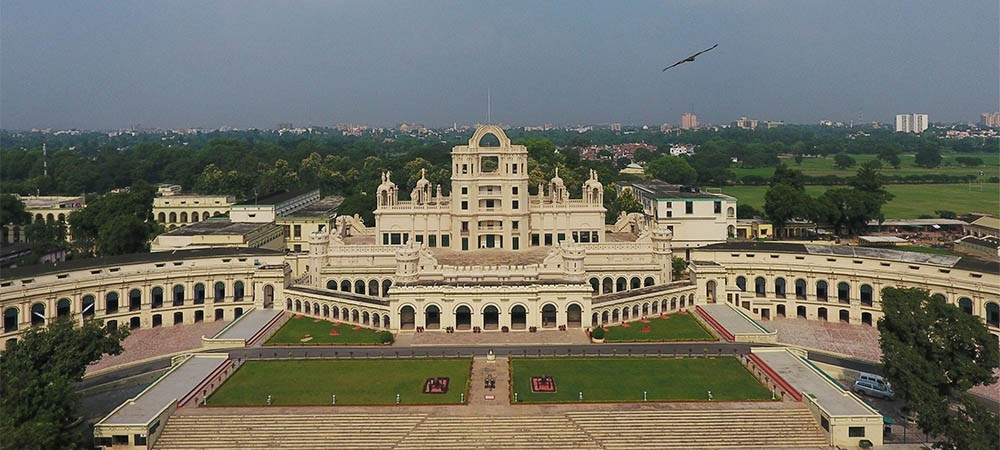
La Martiniere College, Lucknow, founded by Major General Claude Martin, has played a significant role in the educational landscape of India since its establishment in 1840. Its unique status as a ward of the Court, rather than a Trust or Society, and its large estate have contributed to its distinct identity. The institution’s founding principles, rooted in Martin’s Will, emphasized education in the English language and Christian religion for boys who so desired, while explicitly avoiding religious discrimination in admissions.
The College’s demographic composition and policies even in the first half century of its existence reflected the complexities of colonial society. Initially, both European/Anglo-Indian and native (Hindu and Muslim) boys were supported by the Foundation, with the latter group forming a separate Native Department. Facilities, curricula, and daily life were segregated by race and religion, mirroring the broader context of British India. Over time, however, the balance shifted, with increasing preference and numbers for European and Anglo-Indian students, particularly after the events of the 1857 uprising, which led to the disbandment and eventual closure of the Native School in 1876.
The College was committed to supporting boys from disadvantaged backgrounds, a principle evident in the admissions and ‘Foundationer’ system, as well as the introduction of ‘demi-Foundationers’. Despite stated ideals of non-discrimination, practical decisions often reflected prevailing biases regarding race, class, and language. Notably, knowledge of English and conformity to European habits became key admission criteria, further entrenching the institution’s European character.
Throughout its early decades, La Martiniere adapted to changing circumstances and needs. The upheaval of the 1857 Mutiny saw the College’s European and Anglo-Indian students take refuge in the Residency. With the School reestablished after the Uprising, financial adjustments, such as the introduction of sliding-scale fees, capitation payments, and exhibitions, helped to stabilise and expand the College.
Institutional developments which included the establishment of military training through the Volunteer Cadet Company was a response to contemporary needs. The eventual creation of a Girls’ School in the late 1860s, responded to the needs of European and Eurasian girls in the region. Administrative practices became more formalised, with descriptive rolls and rigorous verification of candidates for Foundation support, often probing into family backgrounds and eligibility.
By the end of its first 50 years, La Martiniere College had evolved from an inclusive, multi-community institution into one that more closely reflected the priorities and prejudices of colonial society, focusing predominantly on the education of European and Anglo-Indian boys and, later, girls. Its ethos of charity and support for ‘meritorious poverty’ endured, but was increasingly defined within the boundaries of race, language, and social standing. The closure of the Native School and the expansion of facilities for European students marked a significant demographic and cultural shift that would continue to shape the College’s legacy in the decades to follow.
No institution that must survive can remain static. La Martiniere willy-nilly responded to the needs of the times. From the turn of the century to the mid-20th century, the demographics of the College underwent unforeseen change.
This is the conclusion of Part I on The Changing Demographics of La Martiniere College, Lucknow.
This is the first part of a FOUR part series on the eponymous topic.